
AI in DF/IR: Who is first to pull the rip cord?

 I’m all for AI when and if it benefits DF/IR. If it makes us faster, sharper, or more accurate, bring it on, I’m here for it. But the risk is if we charge ahead without caution, we don’t just risk losing the parts of AI that don’t work for DF/IR. We risk losing all of AI in the courtroom.
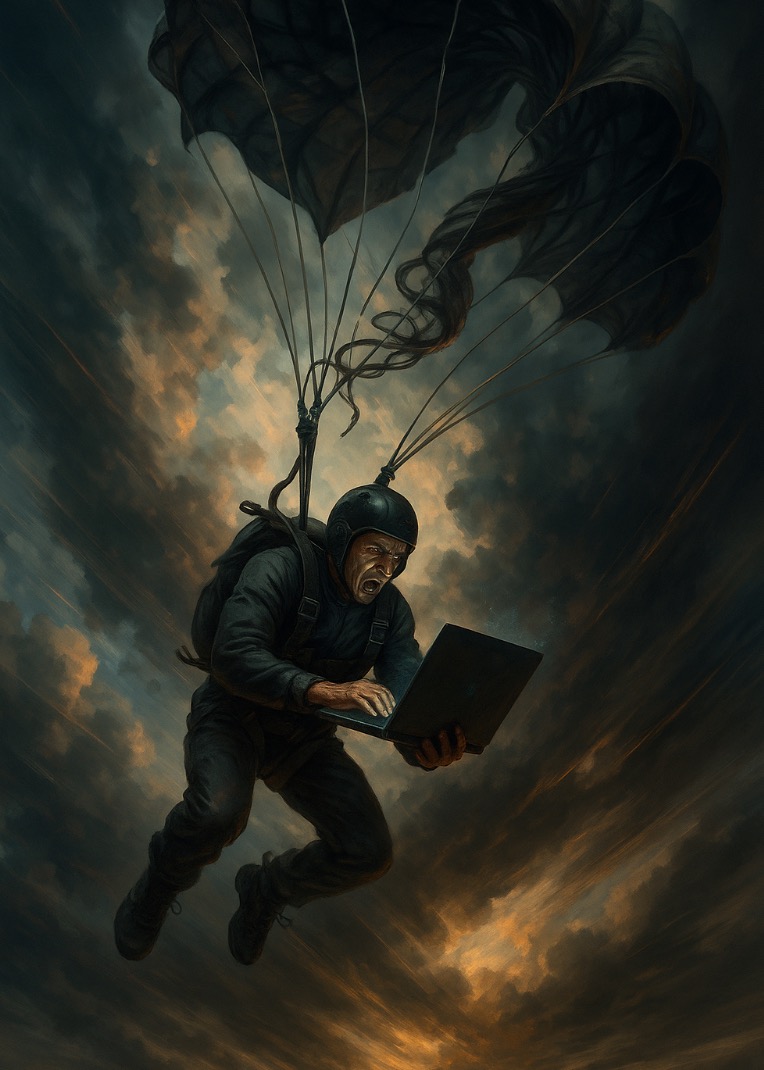
Right now, using AI in DF/IR feels like free-falling from a parachute jump. The wind is in your face and the view is incredible. Just as always, everyone’s experimenting, researching projects, developing prototypes, testing casework, and embedding AI into commercial tools under the hood. This is fun stuff!
But someone will be the first examiner to testify in court that AI was part of their DF/IR analysis and decision-making.
The question is simple: What will the courts rule on AI in casework?
- Will the court flat-out say, “No way, inadmissible”?
- Will it shrug and say, “No problem, come on in”?
- Or, most likely, will it land somewhere in the middle, with strict conditions and limits?
The FLIR Fiasco
New technology is not new in evidence being admitted or excluded. Look at the thermal imaging (FLIR) marijuana grow cases. In Kyllo v. United States (2001), the Supreme Court ruled that pointing a thermal imager at a home to measure heat escaping was a search under the Fourth Amendment, meaning, get a warrant. Washington said the same earlier in State v. Young (1994). Some testimony at the time overstated what FLIR could do, testifying inaccurately that FLIR can “see inside” a house. That exaggeration helped cement a precedent that law enforcement needed a warrant, no matter how limited the technology actually was. FLIR does not see inside buildings, but cross examination convinced the court (judge, jury) that it does.
Bad testimony → bad case law → long-term restrictions.
If we oversell AI in DF/IR in claiming that it’s infallible, hiding error rates, or leaning on “the vendor says it works” we could poison the well the same way. Instead of judges carving out cautious pathways for AI evidence, they could slam the door. And once that door is closed, it’s not just the bad uses of AI that get shut out, it’s everything.
If you’re first to get subpoenaed to testify in one of these AI cases, do it right.
- Be transparent about how you used AI, and where the human expertise stayed in control.
- Show validation studies, error rates, and reproducibility.
- Document prompts, parameters, and versions like you’d document forensic tools and settings.
- Admit limitations as judges respect honesty more than overconfidence.
Your A-Team: The researchers. The vendor. The attorney. You.
Be prepared to build an A Team for these first cases. The opposing counsel will attack AI. It is their duty, so don’t take it personally. They will attack not only AI itself, but also the user and the way AI was used. They will attack the vendor and the way it was developed. They will attack academia’s research.
AI use in these first cases won’t be typical evidence hearings. This will be where attorneys can make a name for themselves (in beating up AI or defending it), experts will have their credibility on the line, courts will have to make unique decisions on evidence admissibility, and the victims in the cases will either receive or be denied justice.
Then the rest of us fall in line. Either AI is removed from tools, and we don’t even mention “artificial intelligence” ever in casework, or we move forward working to perfect AI use in DF/IR.
We’ve already started with cases that involve AI-enhanced video, AI avatars, and AI facial recognition. These are the easy ones. The hard cases will be when AI doesn’t just enhance evidence, but actively draws conclusions, ranks suspects, or suggests investigative paths. If AI ever names a suspect, we will have reached the level of Minority Report.
If we get this wrong, the chute doesn’t just fail for one jumper. It collapses for everyone still in the air, each who will each have their turn in the hot seat. Do you want to be infamous for the expert who ruins it or famous as who sets the stage to get it right for everyone, because just like parachuting, it’s not falling you have to worry about; it’s that sudden stop.
Discover more from Brett's Ramblings
Subscribe to get the latest posts sent to your email.